
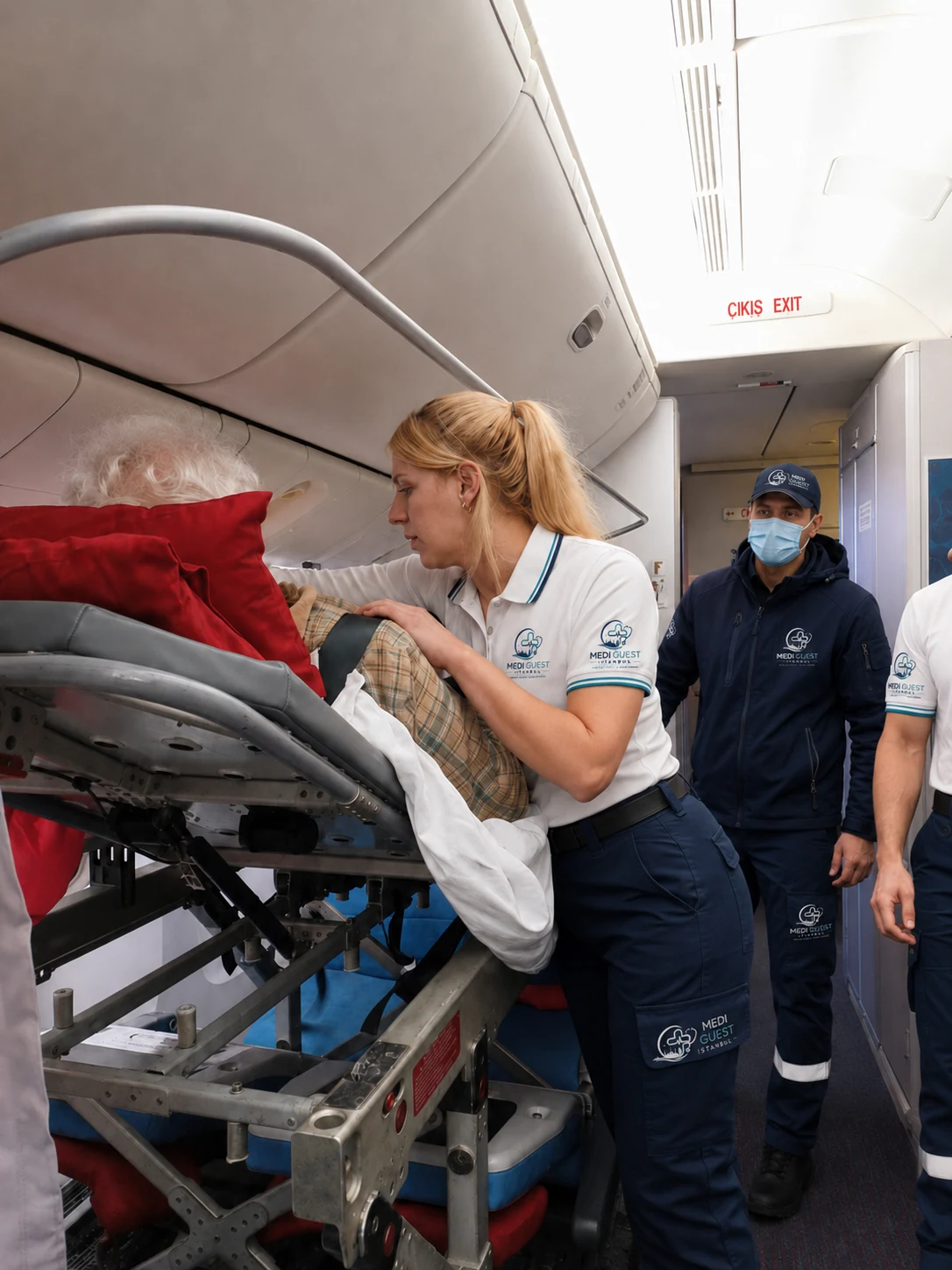
Planning air travel for a passenger who may need oxygen involves more than sourcing a cylinder. Cabin conditions, the underlying respiratory or cardiac condition, resting oxygen saturation, exercise tolerance and flight duration may all influence the medical assessment.
Information that makes coordination easier
Many airlines do not allow standard personal oxygen cylinders in the cabin and may instead provide approved oxygen or accept only specific portable oxygen concentrators. The carrier’s medical team should therefore be contacted as early as possible rather than after all travel arrangements are finalised.
Safe assessment and the next step
A physician may need to complete Fit-to-Fly or MEDIF documentation describing oxygen requirements, device use, escort needs and mobility. Airline acceptance is a separate operational decision and can involve deadlines or equipment restrictions.
Airport logistics matter too. Long walking distances, security procedures and waiting time can increase exertion. Wheelchair assistance, priority support or ground ambulance connection may be appropriate depending on the patient’s condition.
Essential medicines should remain accessible in hand luggage, battery capacity should meet airline rules and connecting flights should be included when calculating the required device operating time.
New or worsening breathlessness, chest pain, low oxygen readings, fever or rapid deterioration should prompt reassessment before travel continues.
Medi Guest Istanbul can coordinate physician review, Fit-to-Fly/MEDIF documentation, oxygen planning, medical escort and airport transfer for flights departing Istanbul.
